thecary
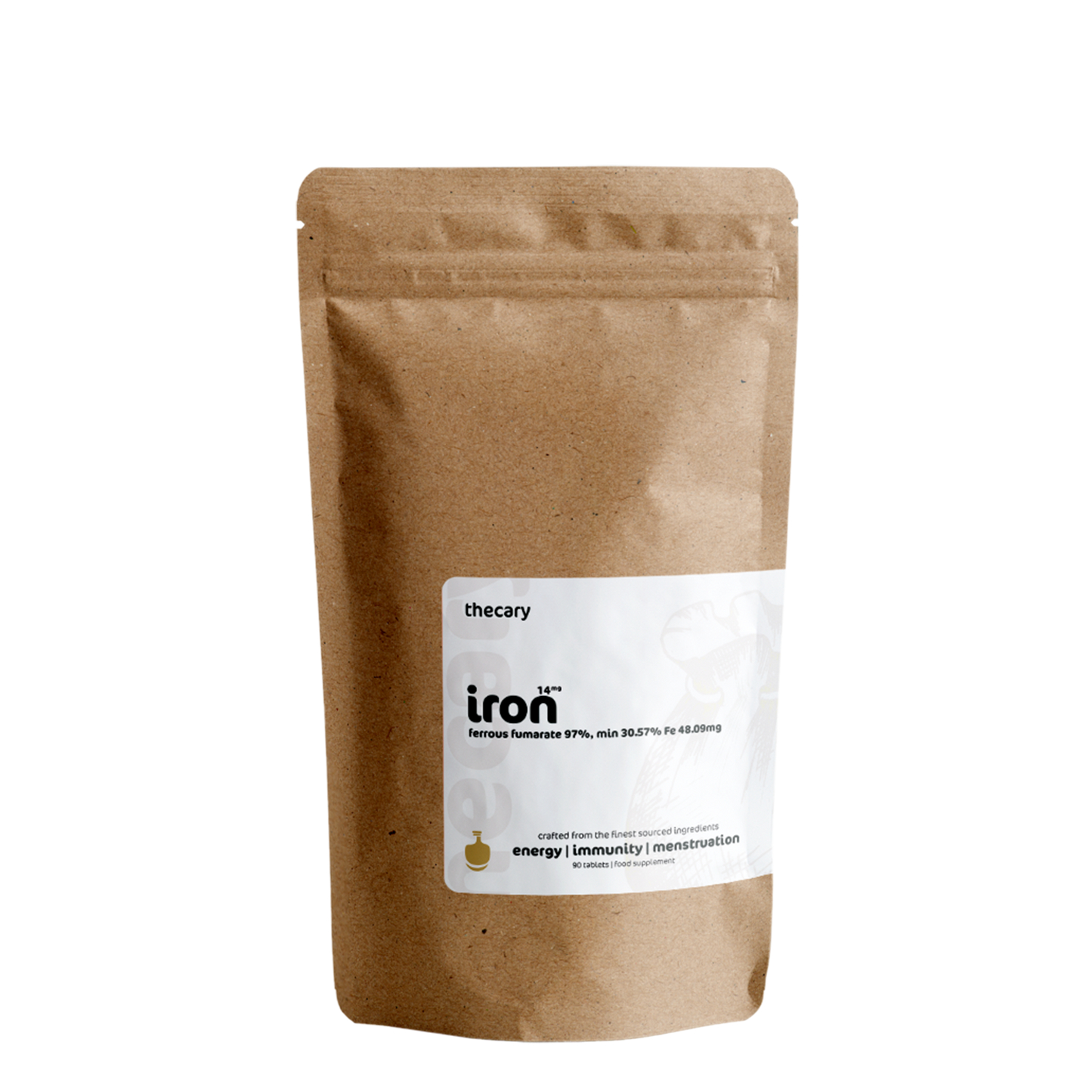
Iron 14mg — Ferrous Fumarate, 90 Tablets
Couldn't load pickup availability
Ingredients
Ingredients
Ferrous Fumarate, Bulking Agents (Microcrystalline Cellulose, Di-Calcium Phosphate), Anti-caking Agent (Magnesium Stearate).
Delivery & Returns
Delivery & Returns
Delivery & Returns
Get free UK shipping on all orders. International and next day delivery charges apply. Returns accepted for incorrect orders within 14 days.See full shipping and returns details.

Ferrous Fumarate
Category
Mineral
Microcrystalline Cellulose
Category
Fibre
Magnesium Stearate
Category
Natural Compound
Di Calcium Phosphate
Category
Mineral
Contributes to normal formation of red blood cells and haemoglobin, normal oxygen transport in the body, and the reduction of tiredness and fatigue.
Key Function
Oxygen transport, energy production.
What it's used for
Red blood cell formation, oxygen transport, energy.
Key Benefits
Contributes to normal formation of red blood cells and haemoglobin, normal oxygen transport in the body, and the reduction of tiredness and fatigue.
Science Behind It
Ferrous fumarate is a well-absorbed oral form of iron. Iron is an essential trace mineral that contributes to the normal formation of red blood cells and haemoglobin, the protein that transports oxygen around the body. It also contributes to normal energy-yielding metabolism, normal cognitive function, and the reduction of tiredness and fatigue.
Acts as a fiber (though typically in small amounts in supplements), provides structure to tablets, generally recognized as safe.
Key Function
Bulking agent, binder, disintegrant.
What it's used for
Pharmaceutical and food additive, mainly as an excipient in tablets and capsules.
Key Benefits
Acts as a fiber (though typically in small amounts in supplements), provides structure to tablets, generally recognized as safe.
Science Behind It
Microcrystalline cellulose (MCC) is a purified, partially depolymerized cellulose. It's an inert, insoluble dietary fiber that is not digested or absorbed by the body. In supplement formulations, its primary role is as a binder to hold ingredients together, a filler or bulking agent to increase tablet size, and a disintegrant to help tablets break down in the digestive tract.
Improves manufacturing efficiency, ensures consistent tablet/capsule fill, generally recognized as safe.
Key Function
Lubricant, anti-adherent.
What it's used for
Pharmaceutical and supplement manufacturing aid to prevent ingredients from sticking
Key Benefits
Improves manufacturing efficiency, ensures consistent tablet/capsule fill, generally recognized as safe.
Science Behind It
Magnesium stearate is a salt formed from magnesium and stearic acid, a saturated fatty acid.
A source of calcium and phosphorus, which are needed for the maintenance of normal bones and teeth.
Key Function
Bone structure, mineral source, bulking agent.
What it's used for
Calcium and phosphorus supplementation, used as a dietary supplement and excipient in tablets.
Key Benefits
A source of calcium and phosphorus, which are needed for the maintenance of normal bones and teeth.
Science Behind It
Di Calcium Phosphate contains both calcium and phosphorus, two essential minerals. Calcium is needed for the maintenance of normal bones and teeth; phosphorus contributes to normal energy-yielding metabolism and the maintenance of normal bones and teeth. In supplements it also acts as a mineral source and a binder.
Iron is one of the most common shortfalls in the modern diet — particularly for women of menstruating age, plant-based eaters and endurance athletes. thecary's Iron delivers 14mg of iron as ferrous fumarate: a full day's reference intake in a single tablet.
What iron does
In the wording authorised by European food-safety regulators, iron contributes to:
· the normal formation of red blood cells and haemoglobin
· normal oxygen transport in the body
· the reduction of tiredness and fatigue
· normal energy-yielding metabolism
· normal cognitive function
· the normal function of the immune system
· the process of cell division
Why ferrous fumarate
Iron supplements use different iron salts, and they are not interchangeable. Ferrous fumarate is well absorbed and provides a high proportion of elemental iron per tablet, while tending to be gentler on the stomach than ferrous sulfate — the form behind much of iron's reputation for digestive upset. Our 14mg refers to elemental iron, the amount the body can actually use.
Who tends to run low
Iron needs are higher for some groups than others. Menstruating women lose iron monthly; vegetarians and vegans take in only non-haem iron, which is absorbed less readily than the haem iron in meat; and endurance athletes, frequent blood donors and those during pregnancy all have raised requirements. If you suspect your iron is low, a simple blood test through your GP is the way to confirm it before supplementing long-term.
How to take it
One tablet daily. Iron is best absorbed on an empty stomach, but if that is uncomfortable, take it with food. Vitamin C improves the absorption of non-haem iron, so a glass of orange juice or a vitamin C supplement alongside it helps; tea, coffee and dairy reduce absorption, so it is worth leaving a gap around those.
A note on safety
Take only as directed, and keep out of reach of children — accidental iron overdose is a leading cause of poisoning in young children. Do not stack an iron supplement on top of others without checking the combined dose, and if you are under medical supervision for your iron levels, follow your clinician's guidance.
Vegan, GMO-free, and made in the UK to FSSC 22000 standard. Food supplements are not a substitute for a varied, balanced diet and a healthy lifestyle. Do not exceed the recommended dose. If you are pregnant, breastfeeding, taking medication or under medical supervision, consult your doctor before use.
-
Made In UK
-
FSSC 22000
-
Vegan
-
GMO Free
-
Science Backed
FAQ
What does iron do?
In the wording authorised by European food-safety regulators, iron contributes to the normal formation of red blood cells and haemoglobin, normal oxygen transport in the body, the reduction of tiredness and fatigue, normal energy-yielding metabolism, normal cognitive function, the normal function of the immune system, and the process of cell division.
Who should take an iron supplement?
Iron needs are higher for menstruating women, vegetarians and vegans (plant foods provide only non-haem iron, which is absorbed less readily), endurance athletes, frequent blood donors, and during pregnancy. If you think your iron may be low, a blood test through your GP is the reliable way to check before supplementing long-term.
What's the difference between ferrous fumarate, ferrous sulfate, and ferrous bisglycinate?
They are different iron salts. Ferrous sulfate is the traditional, cheapest form, but the one most associated with digestive upset. Ferrous fumarate — the form we use — is well absorbed and provides a high proportion of elemental iron, while tending to be gentler. Ferrous bisglycinate is iron bound to an amino acid, often the gentlest of the three. All deliver iron; the differences are absorption and tolerance.
When is the best time to take iron?
Iron is best absorbed on an empty stomach — first thing in the morning or between meals. If that feels harsh, take it with a little food. Try not to take it at the same time as tea, coffee or dairy, which reduce absorption.
Why should I take iron with Vitamin C?
Vitamin C improves the absorption of non-haem iron — the form found in supplements and plant foods. Taking your iron with a glass of orange juice, or alongside a vitamin C supplement, is a simple way to help the body take up more of it.
How long until I feel the effects of iron?
Iron works through consistent daily intake rather than a single dose, so take it steadily as part of a routine. We would not put a timeline on how you might feel — that varies from person to person, and iron status is best judged by a blood test rather than by sensation. Iron contributes to the reduction of tiredness and fatigue as part of a balanced diet.
Why does iron sometimes cause stomach upset?
Iron can be tough on the digestive system — it may cause nausea, constipation or stomach discomfort, more so on an empty stomach and more so with ferrous sulfate. Taking it with a little food, or choosing a gentler form such as the ferrous fumarate we use, can help. If discomfort persists, lower the frequency or speak to your GP.
Can I take iron every day?
Yes, one tablet daily, if you have a raised need for iron. That said, iron is one supplement not to take indefinitely without reason — if your levels are normal, routine supplementation is not necessary. A blood test through your GP is the best way to know. Keep out of reach of children.
Is thecary's iron vegan?
Yes. Our Iron is vegan and free from GMO, made in the UK to FSSC 22000 standard. Because plant-based diets provide only non-haem iron, which is absorbed less efficiently, a vegan iron supplement is a practical option for vegetarians and vegans.
Can I take iron with other thecary supplements?
Yes, with a couple of timing notes. Iron and our Marine Collagen + Vitamin C work well together, since vitamin C aids iron absorption. Iron and magnesium or calcium can compete for absorption, so it is best to space our Magnesium Complex a couple of hours apart from your iron. If you take prescription medication, check with your doctor or pharmacist first.
-
How a single daily ritual can support your cell...
thecary research teamNMN rewards consistency, not quick fixes. Build a daily ritual that supports your cellular energy from the inside out.
How a single daily ritual can support your cell...
thecary research teamNMN rewards consistency, not quick fixes. Build a daily ritual that supports your cellular energy from the inside out.
-
Meet NMN: the cutting-edge bridge between ances...
thecary research teamNMN isn’t new — it exists in the foods our ancestors ate. Discover how modern science is catching up with what traditional diets always supported.
Meet NMN: the cutting-edge bridge between ances...
thecary research teamNMN isn’t new — it exists in the foods our ancestors ate. Discover how modern science is catching up with what traditional diets always supported.