thecary
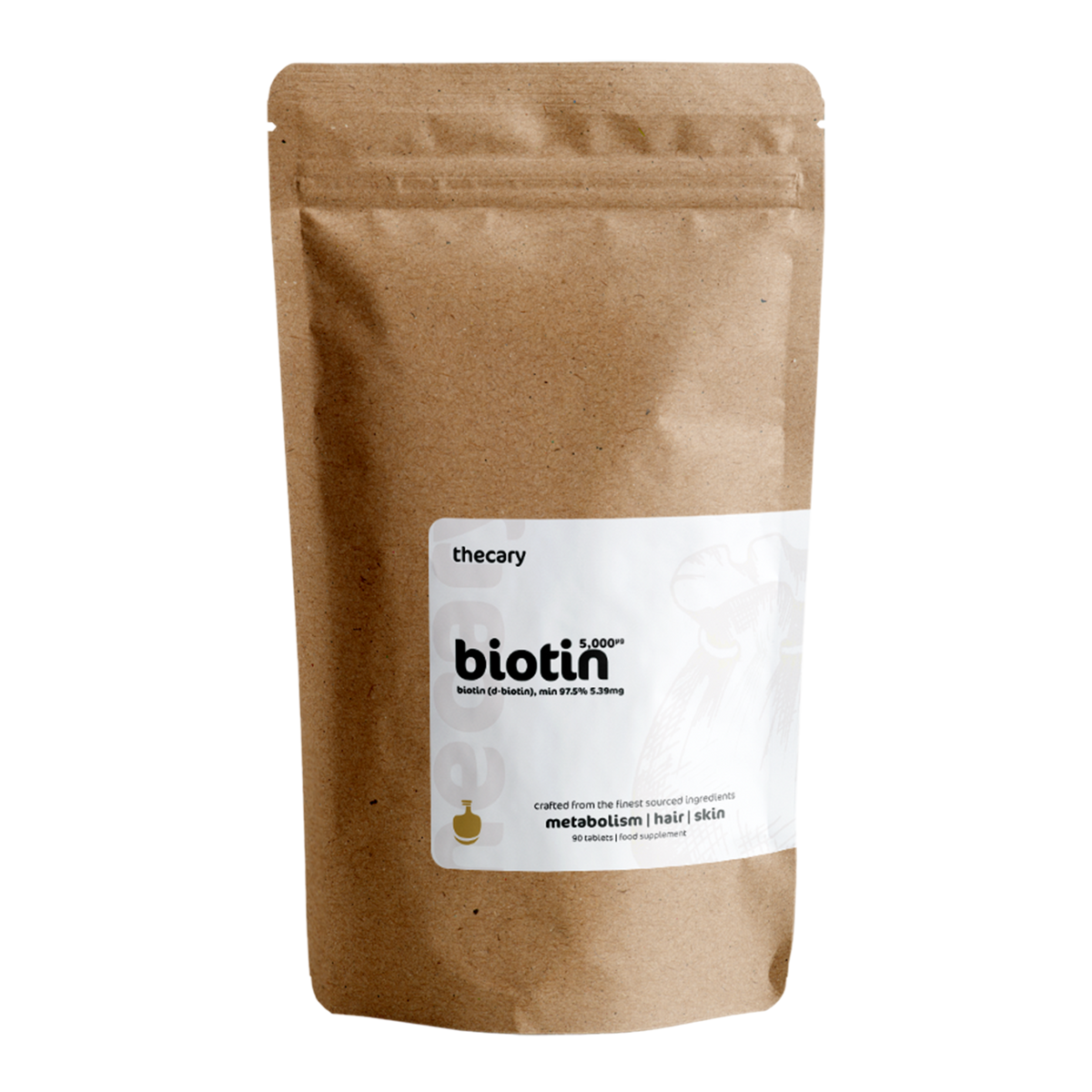
Biotin 5,000μg — 90 Vegan Tablets
Couldn't load pickup availability
Ingredients
Ingredients
Biotin, Bulking Agents (Microcrystalline Cellulose, Di-Calcium Phosphate), Anti-caking Agent (Magnesium Stearate).
Delivery & Returns
Delivery & Returns
Delivery & Returns
Get free UK shipping on all orders. International and next day delivery charges apply. Returns accepted for incorrect orders within 14 days.See full shipping and returns details.

Microcrystalline Cellulose
Category
Fibre
Di Calcium Phosphate
Category
Mineral
Magnesium Stearate
Category
Natural Compound
Biotin
Category
Vitamin
Acts as a fiber (though typically in small amounts in supplements), provides structure to tablets, generally recognized as safe.
Key Function
Bulking agent, binder, disintegrant.
What it's used for
Pharmaceutical and food additive, mainly as an excipient in tablets and capsules.
Key Benefits
Acts as a fiber (though typically in small amounts in supplements), provides structure to tablets, generally recognized as safe.
Science Behind It
Microcrystalline cellulose (MCC) is a purified, partially depolymerized cellulose. It's an inert, insoluble dietary fiber that is not digested or absorbed by the body. In supplement formulations, its primary role is as a binder to hold ingredients together, a filler or bulking agent to increase tablet size, and a disintegrant to help tablets break down in the digestive tract.
A source of calcium and phosphorus, which are needed for the maintenance of normal bones and teeth.
Key Function
Bone structure, mineral source, bulking agent.
What it's used for
Calcium and phosphorus supplementation, used as a dietary supplement and excipient in tablets.
Key Benefits
A source of calcium and phosphorus, which are needed for the maintenance of normal bones and teeth.
Science Behind It
Di Calcium Phosphate contains both calcium and phosphorus, two essential minerals. Calcium is needed for the maintenance of normal bones and teeth; phosphorus contributes to normal energy-yielding metabolism and the maintenance of normal bones and teeth. In supplements it also acts as a mineral source and a binder.
Improves manufacturing efficiency, ensures consistent tablet/capsule fill, generally recognized as safe.
Key Function
Lubricant, anti-adherent.
What it's used for
Pharmaceutical and supplement manufacturing aid to prevent ingredients from sticking
Key Benefits
Improves manufacturing efficiency, ensures consistent tablet/capsule fill, generally recognized as safe.
Science Behind It
Magnesium stearate is a salt formed from magnesium and stearic acid, a saturated fatty acid.
Contributes to the maintenance of normal hair and skin, normal macronutrient metabolism, and normal function of the nervous system.
Key Function
Coenzyme for carboxylase enzymes, macronutrient metabolism.
What it's used for
Hair, skin, and nail health, energy metabolism.
Key Benefits
Contributes to the maintenance of normal hair and skin, normal macronutrient metabolism, and normal function of the nervous system.
Science Behind It
Biotin is a coenzyme for several carboxylase enzymes that play roles in metabolism, including fatty acid synthesis and the breakdown of certain amino acids. It contributes to the maintenance of normal hair, skin, and mucous membranes, normal macronutrient metabolism, and the normal function of the nervous system.
Biotin — also known as vitamin B7 — is the vitamin most associated with hair and skin. thecary's Biotin delivers 5,000μg per tablet: a clinically meaningful daily dose, 100 times the EU reference intake, in a single small vegan tablet.
What biotin is
Biotin is a water-soluble B-vitamin that works as a coenzyme in how the body breaks down fats, proteins and carbohydrates, turning food into usable energy. It occurs in eggs, almonds, salmon and seeds, but the typical Western diet does not always provide optimal levels — particularly for those eating fewer animal products.
What thecary's Biotin supports
In the wording authorised by European food-safety regulators, biotin contributes to:
- the maintenance of normal hair
- the maintenance of normal skin
- normal energy-yielding metabolism
- the normal functioning of the nervous system
- normal macronutrient metabolism
- normal psychological function
- the maintenance of normal mucous membranes
Why 5,000μg?
The EU reference intake for biotin is just 50μg — the level needed to prevent deficiency. Most UK biotin supplements provide 5,000μg to 10,000μg, the doses most used in research and practice for hair and skin. Our 5,000μg sits at a meaningful level without straying into megadose territory. Biotin is water-soluble, so the body passes any excess — there is no benefit to going higher than needed.
Who tends to run low
Outright deficiency is rare, but lower intake is more common among vegans and vegetarians (the richest sources are animal foods), people on restrictive diets, those on certain long-term medications, and during pregnancy and breastfeeding. Speak to your GP or midwife before supplementing while pregnant.
How to take it
One tablet daily with food and water. Biotin is water-soluble and can be taken at any time, though most people take it with breakfast. For hair and skin, take it consistently — these cells turn over slowly, so give it time as part of a steady routine.
Biotin and blood tests
High-dose biotin can interfere with some laboratory blood tests — including thyroid tests, troponin (used to assess heart attacks), and some hormone tests. If you have a blood test scheduled, stop taking biotin at least 72 hours (three days) beforehand and tell your healthcare provider you have been taking it. This is a recognised consideration with all high-dose biotin, not unique to ours — the FDA issued a public alert in 2017, and the NHS notes the same.
Vegan, GMO-free, and made in the UK to FSSC 22000 standard. Food supplements are not a substitute for a varied, balanced diet and a healthy lifestyle. Do not exceed the recommended dose. If you are pregnant, breastfeeding, taking medication or under medical supervision, consult your doctor before use.
-
Made In UK
-
FSSC 22000
-
Vegan
-
GMO Free
-
Science Backed
FAQ
What does biotin do?
Biotin (vitamin B7) is a water-soluble B-vitamin. In the wording authorised by European food-safety regulators, it contributes to the maintenance of normal hair and normal skin, normal energy-yielding metabolism, the normal functioning of the nervous system, normal macronutrient metabolism, normal psychological function, and the maintenance of normal mucous membranes.
Does biotin help hair growth?
Biotin contributes to the maintenance of normal hair — that is its authorised role. It plays a part in keratin-related metabolism, and low biotin can affect hair, which is why it is the vitamin most associated with hair and skin.
Does biotin help nails?
Biotin's authorised claims cover the maintenance of normal hair and skin, alongside normal energy metabolism and the nervous system. Many people take it as part of a hair-and-skin routine.
Is biotin safe to take every day?
Yes — it is designed for daily use, one tablet a day. Biotin is water-soluble, so the body passes what it does not use rather than storing it. Do not exceed the recommended dose. If you are pregnant, breastfeeding or taking medication, speak to your doctor first — and see the note below about blood tests.
How long does it take for biotin to work?
Because hair and skin cells turn over slowly, biotin is best taken consistently as part of a routine over time.
Does biotin cause acne?
There is no strong evidence that biotin causes acne. Some people anecdotally report breakouts at very high doses, possibly linked to how biotin and vitamin B5 are absorbed together, but this is not well established. If you notice skin changes, lowering the dose or pausing is reasonable.
Will biotin affect my blood test results?
It can. High-dose biotin can interfere with some laboratory blood tests — including thyroid tests, troponin (used to assess heart attacks) and some hormone tests. If you have a blood test scheduled, stop taking biotin at least 72 hours beforehand and tell your healthcare provider you have been taking it. The FDA issued a public alert on this in 2017; it applies to all high-dose biotin, not only ours.
Should men take biotin?
Yes — biotin's role is the same regardless of sex. Its authorised claims for the maintenance of normal hair and skin, energy metabolism and the nervous system apply to everyone. It is vegan and suitable for any adult.
Is 5,000μg of biotin too much?
No. The EU reference intake is 50μg, but 5,000μg to 10,000μg are the doses most commonly used for hair and skin, and biotin has no known toxicity at these levels — being water-soluble, any excess is passed in urine. The main practical consideration is the effect on blood tests noted above, not safety.
Is thecary's biotin vegan?
Yes. Our Biotin is vegan and free from GMO, with no artificial fillers, made in the UK to FSSC 22000 standard. Since the richest dietary biotin sources are animal foods, a vegan supplement is a practical option for plant-based diets.
Can I take biotin with other supplements?
Yes. Biotin pairs naturally with our Marine Collagen + Vitamin C for those focused on skin. Note that our Vitamin B Complex already contains biotin, so take one or the other rather than heavily doubling up. If you take prescription medication, check with your doctor or pharmacist first.
-
How a single daily ritual can support your cell...
thecary research teamNMN rewards consistency, not quick fixes. Build a daily ritual that supports your cellular energy from the inside out.
How a single daily ritual can support your cell...
thecary research teamNMN rewards consistency, not quick fixes. Build a daily ritual that supports your cellular energy from the inside out.
-
Meet NMN: the cutting-edge bridge between ances...
thecary research teamNMN isn’t new — it exists in the foods our ancestors ate. Discover how modern science is catching up with what traditional diets always supported.
Meet NMN: the cutting-edge bridge between ances...
thecary research teamNMN isn’t new — it exists in the foods our ancestors ate. Discover how modern science is catching up with what traditional diets always supported.